


Document control
Responsible party: SANSNiKTM LLC, 7901 4th Street North, St. Petersburg, Florida, 33702, United States.
Registered agent / company address: 7901 4th St. North, St. Petersburg, Florida, 33702, United States.
Effective date: August 13, 2026. Version: 1.0. Document owner: Luke Anderson, Founder & Lead Developer.
In this dossier, the capitalized brand name SANSNiKTM refers to the legal entity SANSNiKTM LLC.
Introduction and overview
As an exclusively direct to consumer (DTC) manufacturing and commerce ecosystem, SANSNiKTM LLC (operating as SANSNiKTM) controls the entire lifecycle of its physical products, from proprietary engineering in St. Petersburg to final digital distribution. Because our fulfillment and sales pipelines bypass traditional wholesale channels entirely, our relationship with the end consumer relies on absolute transparency and high fidelity communication. This document is the definitive legal framework for our public facing environmental and ethical marketing claims.
The Federal Trade Commission (FTC) enforces strict truth in advertising standards under 15 U.S.C. § 45, specifically governing environmental marketing through the FTC Green Guides (16 C.F.R. Part 260). These federal regulations, alongside rigorous state level statutes like California’s SB 343, dictate that an advertiser must possess “competent and reliable scientific evidence” to substantiate any objective claim before that claim is disseminated to the public.
The primary objective of this protocol is to compile, index, and organize the physical and scientific evidence proving that SANSNiKTM’s active formulas are vegan, its flexible cleansing matrices are fully biodegradable, and its packaging architectures are structurally compostable. Adherence to these substantiation baselines is mandatory to mitigate regulatory exposure across all 50 US states.
1. The Veracity Mandate
SANSNiKTM’s approach to brand marketing explicitly rejects “greenwashing,” the practice of using vague, unqualified terms like “eco friendly” or “sustainable” without specific, evidentiary backing.
Our operational mandate requires that every visual badge, symbol, and text claim printed on our physical packaging or displayed within our digital storefront possesses a direct, unbroken lineage to a verified supplier document or a third party laboratory test. This dossier acts as that central repository, ensuring that all claims regarding the Contour BarTM and the Contour BarTM with Grit collections meet the FTC’s threshold for objective substantiation.
2. Physical and chemical specifications: the Flexibility Scale
To accurately substantiate the environmental impact of our products, we must first define their physical state. SANSNiKTM categorizes all cleansing compounds using a proprietary physical density taxonomy known as the SANSNiKTM Firmness Scale or F Scale.
The F Scale operates on an absolute continuum from F0 to F10. F0 represents a product that is entirely liquid in composition (analogous to a traditional body wash), while F10 represents a product that is entirely rigid and solid (analogous to a traditional milled bar soap).
Moving a product along the F Scale (for example, from an F3 to an F7) requires highly complex, proprietary adjustments to the ratios across the entire ingredient profile. Consequently, while the tactile outputs differ drastically, the foundational chemical biodegradability profile remains effectively identical across the scale, allowing our environmental claims to apply uniformly to the entire collection.
3. Ethical sourcing: vegan formulations and animal testing policy
SANSNiKTM maintains strict internal ethical standards regarding raw material procurement. However, to maintain regulatory agility, we strictly delineate between our internal standards and our public facing marketing claims.
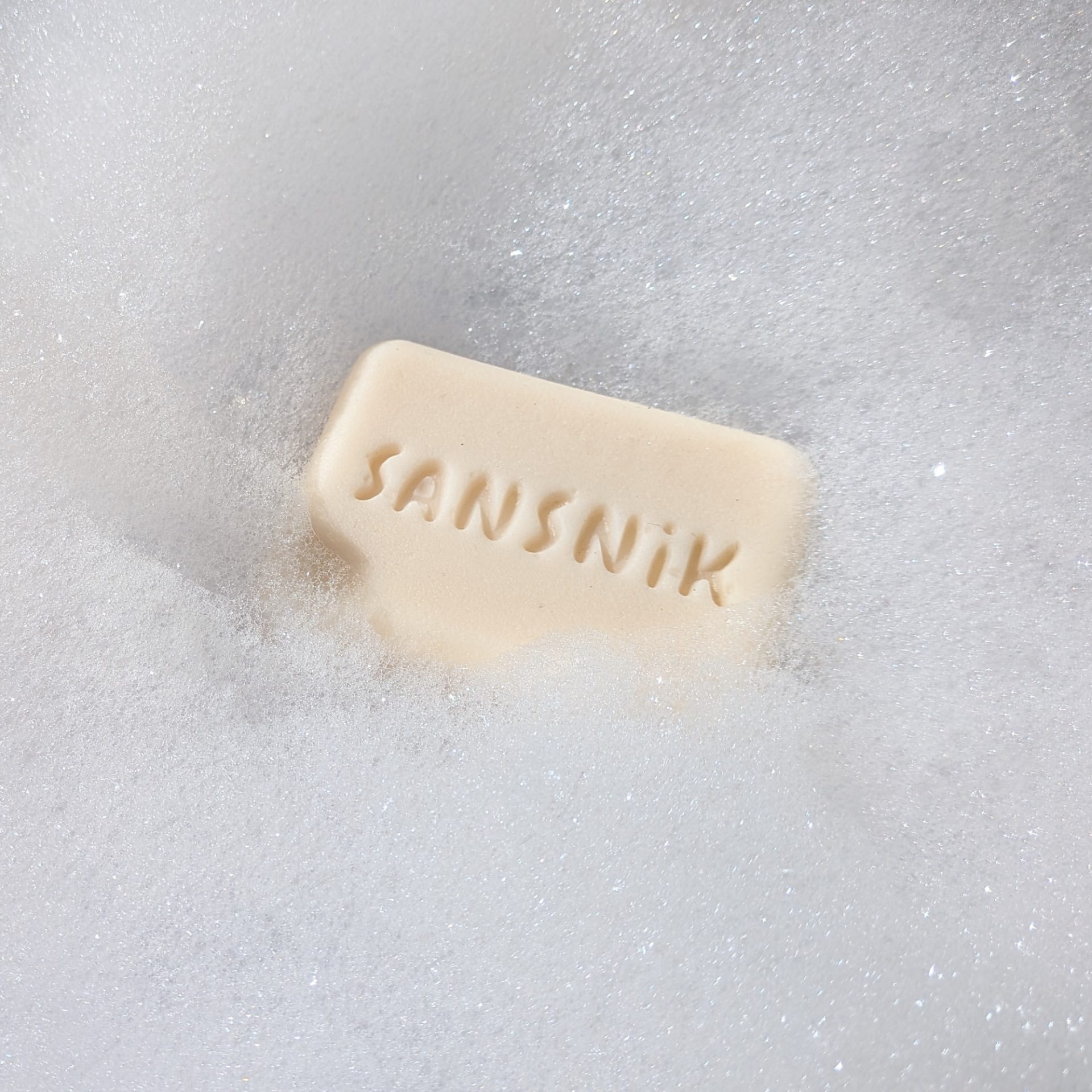
3.1 The vegan scope (cleansing bars). The FTC requires that brands validating “free of” claims ensure that the specified substances are not intentionally added and do not exceed acknowledged background levels. The active Contour BarTM and Contour BarTM with Grit cleansing bar lines are 100% vegan. While the SANSNiKTM physical compound density scale utilizes complex ratios of natural polysaccharides and surfactants, we mandate that no animal byproducts are introduced during their manufacturing process.
The glycerin protocol: because commercial glycerin is frequently derived from animal tallow, SANSNiKTM explicitly mandates that all approved active suppliers source 100% plant derived (or synthetic) glycerin.
Brand wide limitation: it is explicitly noted in this dossier that the SANSNiKTM brand is not exclusively vegan. Future product expansions (for example, shaving products or hair care) may utilize ethically sourced animal byproducts (such as beeswax or lanolin). Vegan claims are localized strictly to the Contour BarTM and Contour BarTM with Grit lines.
Substantiation is maintained via active Certificates of Analysis (CoAs) and supplier declarations from our primary, secondary, and tertiary chemical vendors, securely logged within SANSNiKTM systems.
3.2 Internal nonanimal testing standard. While SANSNiKTM mandates internally that our raw material vendors do not conduct animal testing, we explicitly do not advertise our products as “Cruelty Free” on our packaging, nor do we utilize generic bunny iconography. This strategic omission bypasses the requirement for costly third party certifications (for example, Leaping Bunny) and shields the brand from FTC scrutiny regarding complex downstream supply chain audits.
4. Biodegradable matrix engineering: the cleansing bar
The FTC Green Guides state that an unqualified “biodegradable” claim is deceptive unless a marketer has competent and reliable scientific evidence proving the entire product will completely break down and return to nature within one year after customary disposal.
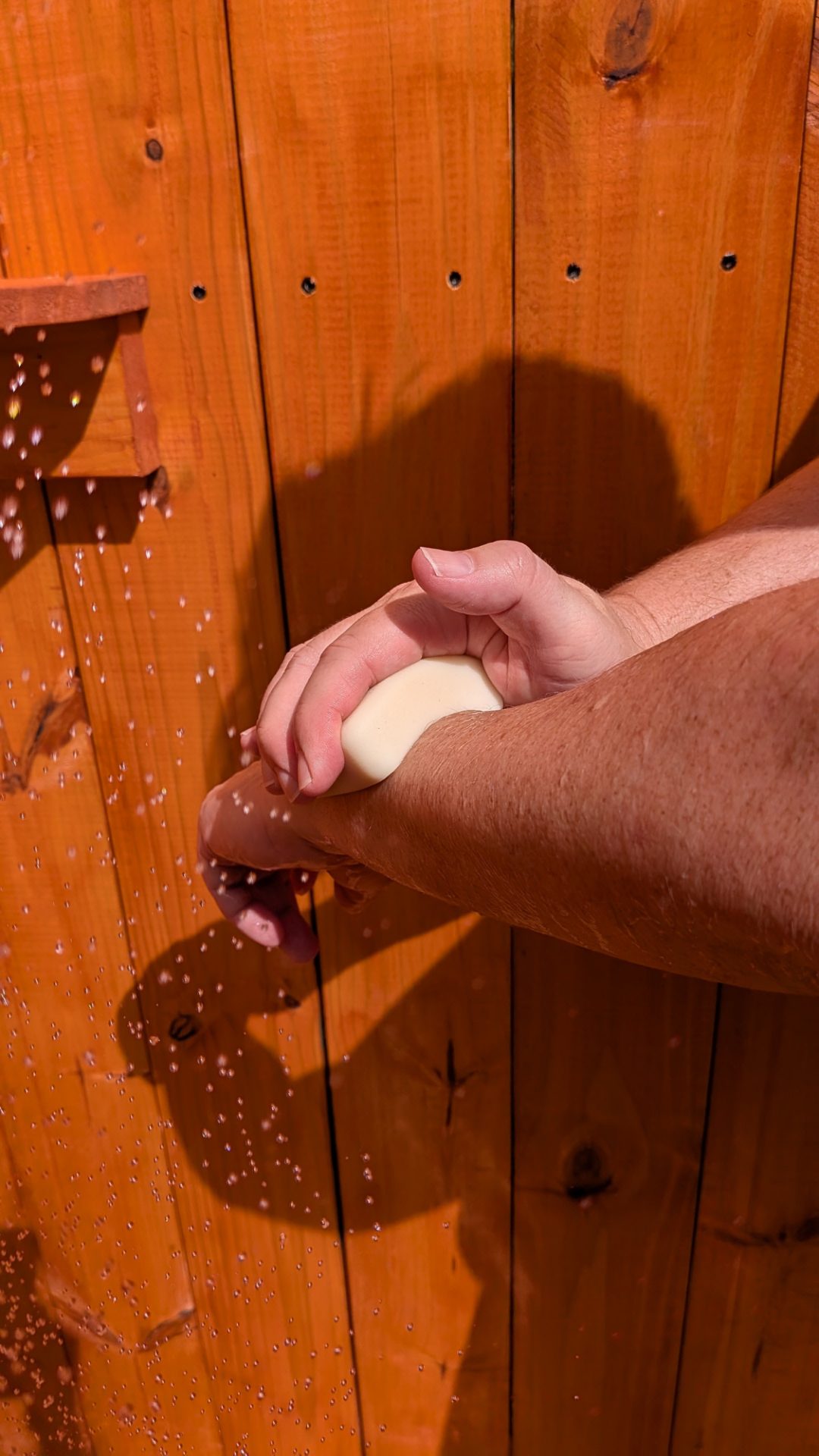
4.1 Aqueous biodegradation mechanics. Because the Contour BarTM and the Contour BarTM with Grit are wash off cosmetics, their customary disposal route is through municipal wastewater systems. The proprietary F Scale cleansing matrices (ranging from F3 to F7) are engineered utilizing water soluble components and natural food grade binders (Zea Mays and Solanum Tuberosum starch).
The natural degradation of these starchy polysaccharides, combined with readily biodegradable surfactants (SLES and Cocamidopropyl Betaine), ensures the compound density matrices rapidly metabolize and break down in aqueous wastewater treatment environments well within the FTC’s one year threshold. Binding agents such as Chondrus Crispus (carrageenan) are inherently biodegradable natural seaweed polysaccharides.
The pumice exception: the Contour BarTM with Grit collection contains granulated pumice. Because pumice is a naturally occurring, inert volcanic rock, it is already “returned to nature” and does not negatively impact the biological breakdown of the surrounding matrix.
The fragrance exception: cosmetic fragrance oils are utilized at statistically insignificant volumes (typically less than 2% of the matrix mass), ensuring they dissipate without inhibiting the overarching biological breakdown of the cleansing bar.
4.2 Third party testing substantiation (OECD 301B). To legally bulletproof this claim, SANSNiKTM relies on the OECD 301B Ready Biodegradability Test. This is the global standard laboratory test that measures the evolution of carbon dioxide (CO₂) produced when microbes consume a product in water over a 28 day period.
Future testing directive: as the brand scales, operations will commission an accredited environmental laboratory (for example, Eurofins or SGS) to run the OECD 301B test on the Contour BarTM F5 master base. Upon successful completion (greater than 60% degradation in 28 days), the lab report will be appended to this section.
Current substantiation: pending formal OECD 301B laboratory execution, SANSNiKTM maintains legal substantiation through reliance on established stoichiometric and peer reviewed environmental fate data. The core matrix relies entirely on organic, carbon based materials (polysaccharides and polyols). Scientific literature confirms that Zea Mays, Solanum Tuberosum, Chondrus Crispus, and vegetable glycerin achieve rapid biodegradation in standard aqueous environments. Furthermore, the primary surfactants, SLES and Cocamidopropyl Betaine, are globally classified by chemical safety databases as “readily biodegradable” under standard OECD guidelines.
5. Compostable packaging architecture
Packaging substantiation carries the highest regulatory risk. The FTC mandates that a “compostable” claim requires scientific evidence that the materials will break down into natural elements in a timely manner within a composting environment, leaving no toxic residue.
5.1 Material composition and degradation. SANSNiKTM packaging dielines utilize structurally compostable materials, specifically engineered to enhance product survivability while meeting environmental thresholds. Our packaging architecture allows for operational flexibility based on supply chain availability and specific product needs.
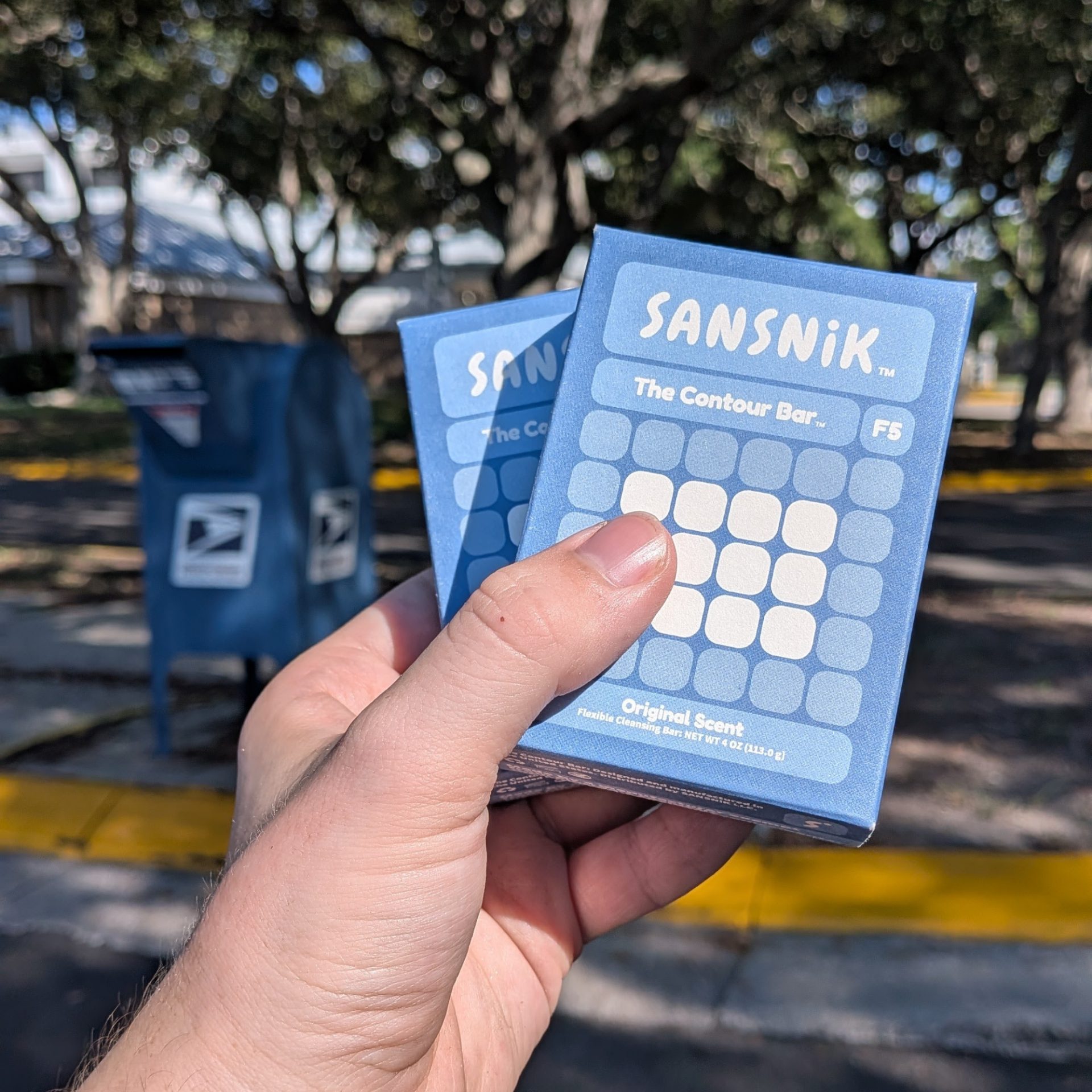
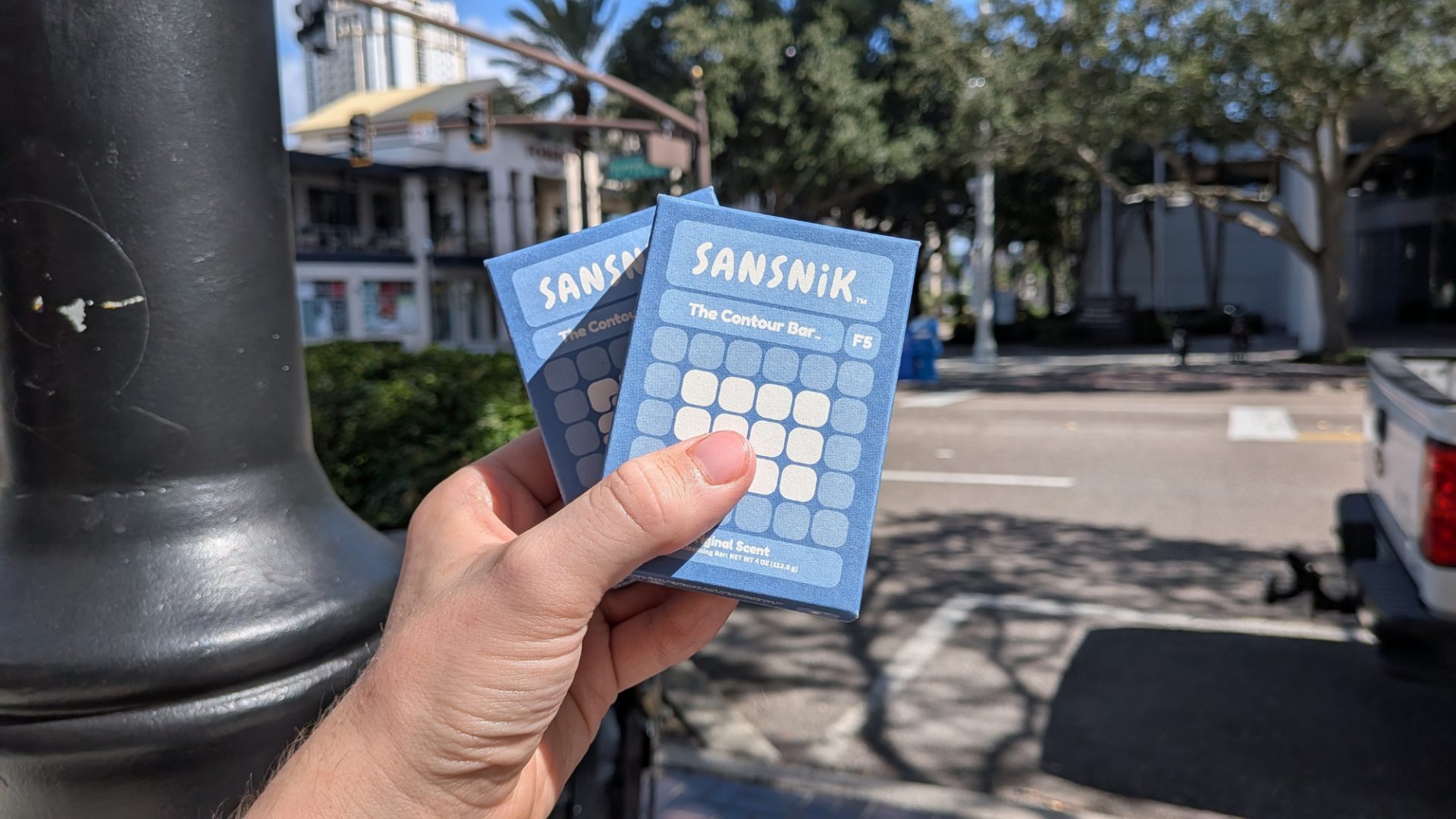
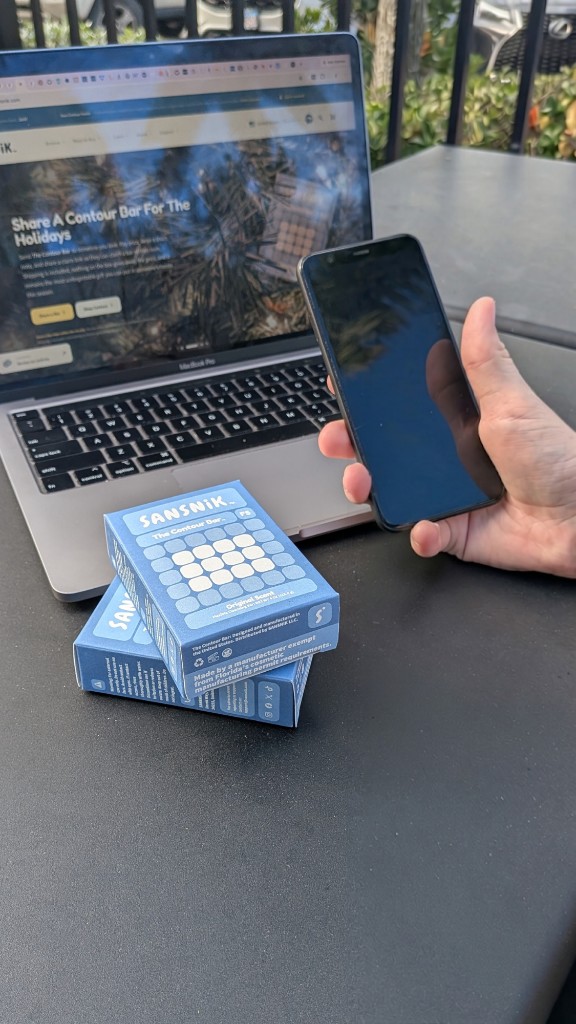
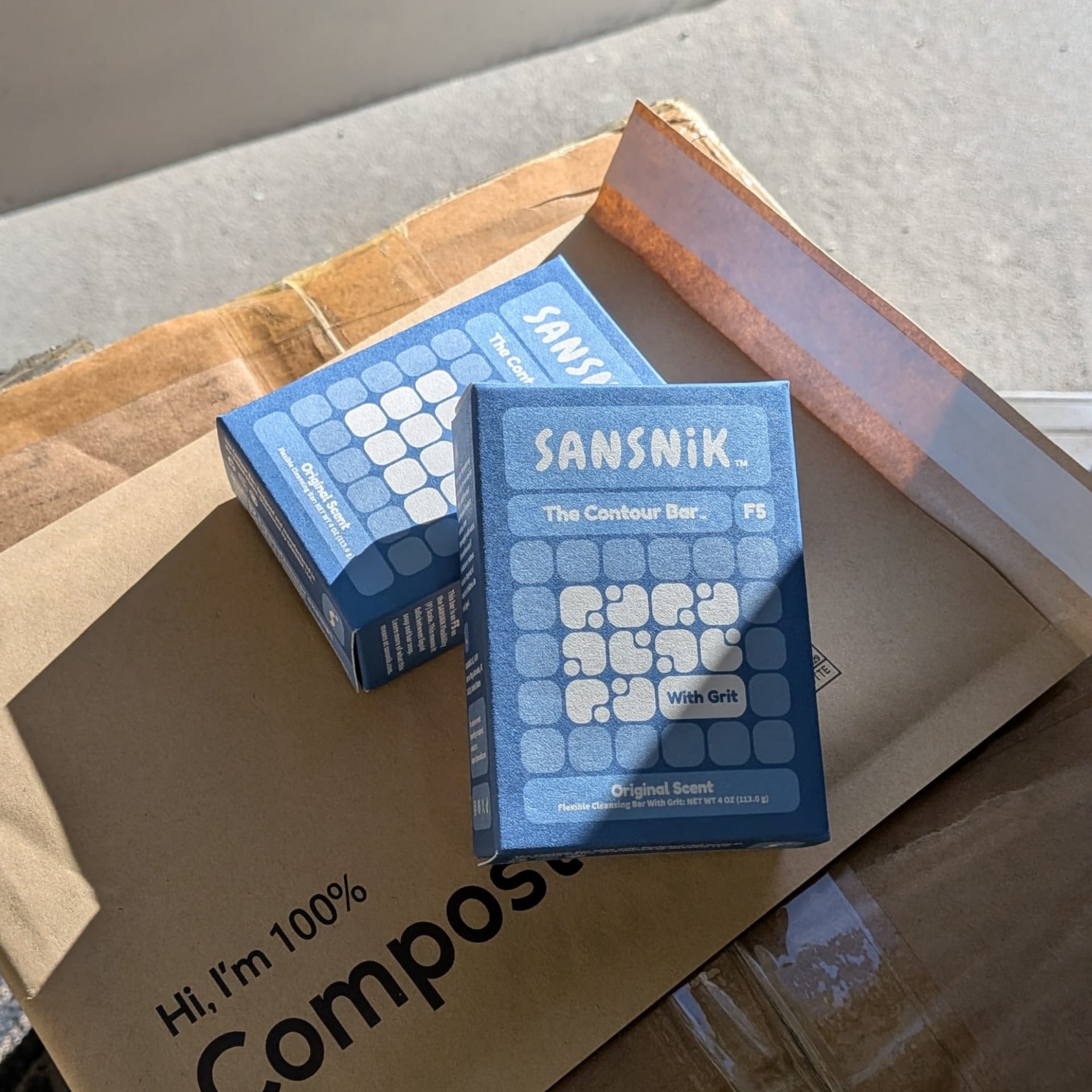
The outer carton (YBS Packaging and additional suppliers): the primary dieline is constructed from natural, biodegradable Kraft paperboard or Solid Bleached Sulfate (SBS) carton board, sourced from YBS Packaging in Washington state (or any additional suppliers). Both substrates are selected for their environmental degradation profiles.
The optional inner sleeve (ClearBags): depending on the specific SKU (such as potential moisture sensitive variants), the bar may be wrapped in a wood pulp derived, cellophane like heat sealable sleeve sourced from ClearBags. If utilized, this cellulose film is intrinsically compostable and improves transit survivability. It is not a mandatory default for the initial Contour BarTM or Contour BarTM with Grit lines.
The ink exception (petroleum based): the Kraft or SBS boxes are printed using standard digital petroleum based inks. Under ASTM D6868 (the standard for compostable packaging), noncompostable additives like ink are legally permitted provided they constitute less than 1% of the total dry weight of the package and pass ecotoxicity limits (they do not poison the soil). SANSNiKTM relies on the minimal surface area coverage of our minimalist design to satisfy this exemption.
5.2 The “substantial majority” qualification. Because industrial composting access across the 50 United States does not currently meet the FTC’s 60% threshold, SANSNiKTM strictly adheres to the requirement for qualifying language. All packaging bearing compostability claims is explicitly qualified with the consumer directive: “For more information on how to recycle in your area, visit how2recycle.info.”
6. Active product taxonomy and claims mapping
SANSNiKTM is executing a phased commercial rollout. The following mapping captures the product architecture against its active marketing claims.
The Contour BarTM F5 (medium flexibility): vegan, biodegradable. Phase 1: active launch.
The Contour BarTM F3 (high flexibility) and F7 (low flexibility): vegan, biodegradable. Phase 2: target Q4 2026.
The Contour BarTM with Grit F3, F5, and F7: vegan, biodegradable. Phase 2: target Q4 2026.
6.1 Claims taxonomy and badging matrix. Vegan: text only on the finished matrix (FTC truth in advertising). Phthalate & paraben free: “PF” circular badge on the finished matrix (FTC free of guides § 260.9). Compostable: Mobius loop / text on the outer box and inner sleeve if applicable (FTC Green Guides § 260.7). Biodegradable: text callout on the rinse off compound (FTC Green Guides § 260.8).
7. Quality control safety rails and ad copy auditing
To ensure that marketing velocity does not outpace legal substantiation, SANSNiKTM enforces a strict internal auditing protocol. Our internal systems rely on immutable records; our marketing must operate with the same rigor.
Digital gating: no employee or executive operator may activate a new digital product listing or deploy digital advertising copy containing environmental claims unless the evidentiary documentation (supplier CoAs, OECD tests) is actively logged within this dossier.
Dieline audits: before any new packaging dieline is transmitted to YBS Packaging for a production print run, the graphic files must be cross referenced against the badging matrix (Section 6.1) to ensure no unauthorized visual claims (such as a Leaping Bunny logo) have been introduced by the design team.
8. Conclusion, governance, and phased material updates
This FTC Substantiation Dossier is a living document. Any changes to raw material procurement, packaging supplier contracts, or ink compositions must trigger an immediate review of Sections 3, 4, and 5.
If packaging materials are fundamentally altered outside the approved Kraft/SBS scope (for example, shifting to nonbiodegradable plastics), this document must be revised to version 1.1, locking the new material safety data sheets into our compliance repository before the newly packaged inventory is cleared for consumer fulfillment.
Authorized by Luke Anderson, Founder & Lead Developer, SANSNiKTM LLC. Date: August 13, 2026.
Operational contact: sansnikllc@gmail.com · (941) 402-2573 · https://sansnik.com
Adherence to this protocol is mandatory for all system operators. The integrity of SANSNiKTM’s product safety depends on the disciplined execution of the workflows detailed above.
Need help with an order under this policy? Contact support or Track my order. Related: Our Guarantee.
Other policies & documentation