
SANSNiKTM
Designed To Leave Nothing Behind
Biodegradability, vegan Contour bars, and plastic-free packaging — claimed carefully, designed as part of the brief.
Before you read
A design brief, not a campaign
This page is Contour’s environmental commitment in plain language: what the bar is built to do when it rinses away, what stays out of the formula, and what the box is made of. The legal substantiation lives next door.
You are here
Designed To Leave Nothing Behind
Biodegradability, vegan Contour bars, plastic-free packaging, and why eco-safety is part of the design brief.
The evidence
Environmental Claims Dossier
The FTC-framed reference document behind every public claim on Contour.
Open the dossierThe product origin
The Story of The Contour Bar
How we engineered Contour at F5: the brief, the standards, and the decision to ship.
Read the story
The ethos
Eco-safety at scale is not a slogan. It is part of what good design means.
A Contour bar that feels right in the hand and leaves a plastic bottle, a soap dish, or a vague “green” claim behind is unfinished work. We treat environmental responsibility the same way we treat flex, heat stability, and longevity: as a design constraint that has to survive real use, real wastewater, and real scrutiny.
Greenwashing thrives on soft words that never meet a document. Contour’s public claims are narrower on purpose. Where we say biodegradable, vegan, or compostable packaging, we mean something you can check — and we say what is still ahead of us, not only what sounds finished.
That discipline is how we manufacture under our own roof, too. The people who set the F5 brief are the same people who choose the carton board and use vegetable glycerin — never animal-derived glycerin — in the Contour lines. Care in the plant and care in the claim are one system.
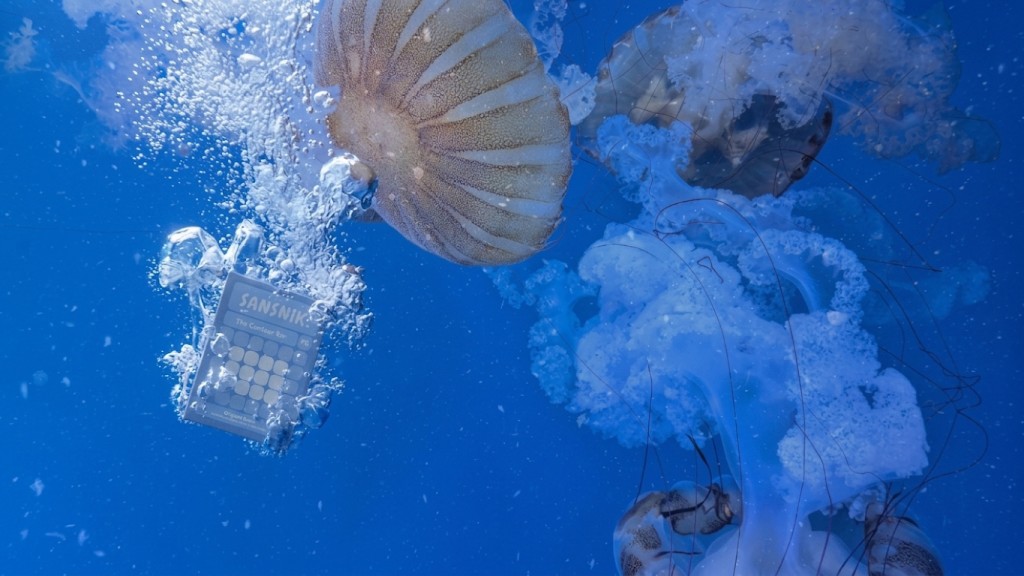
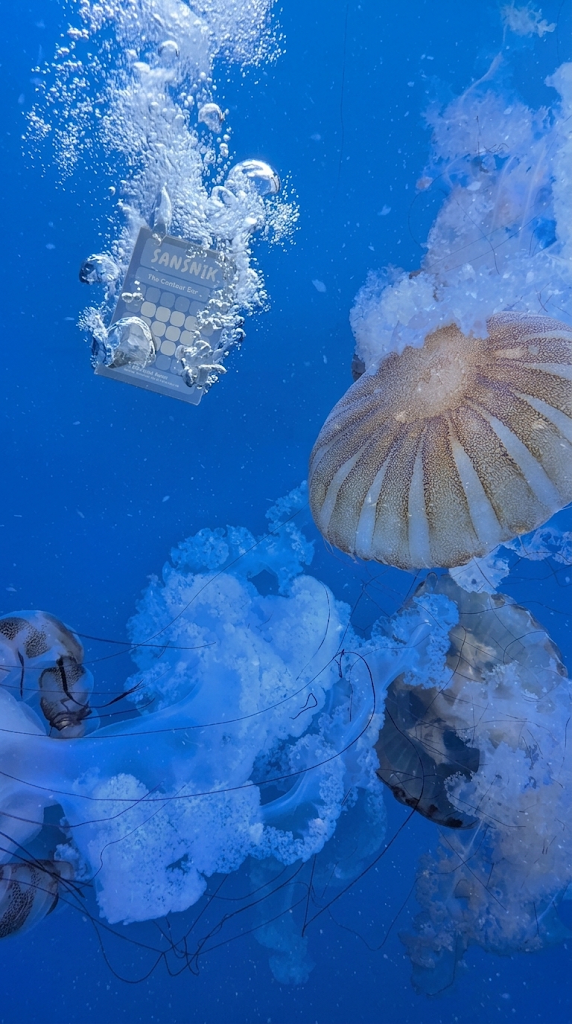
Biodegradability
Built to rinse into wastewater...with claims we can stand behind.
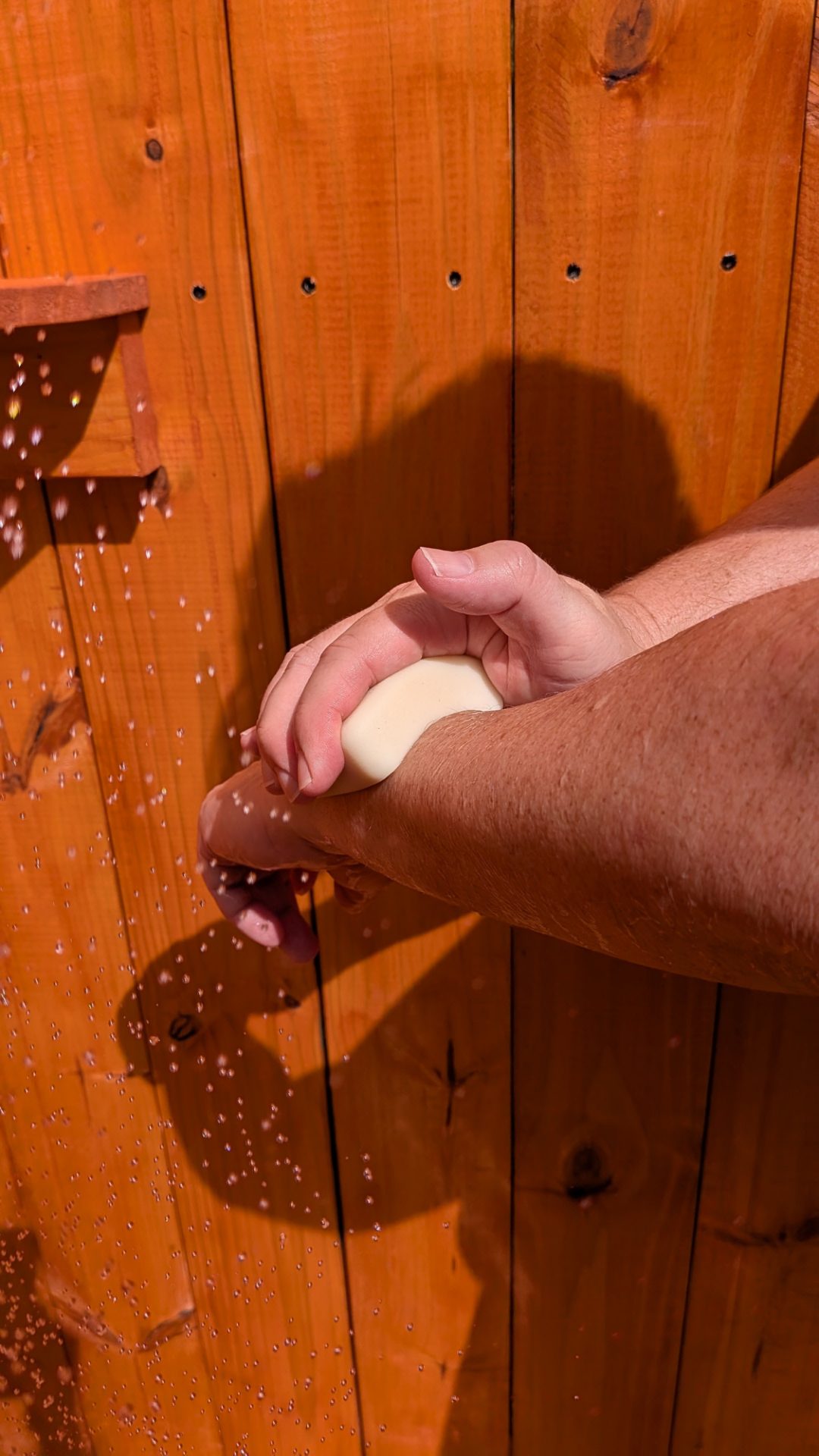
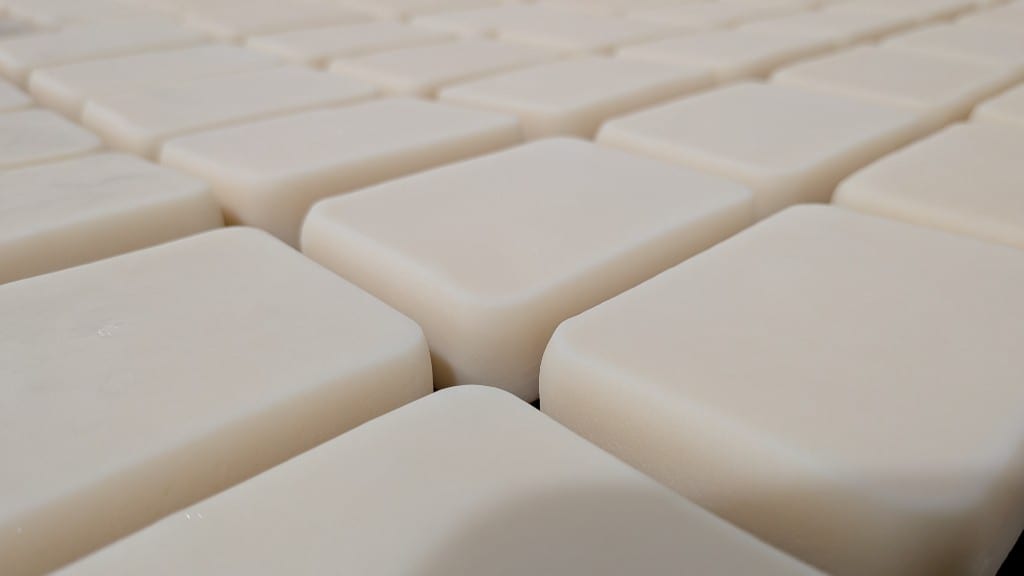
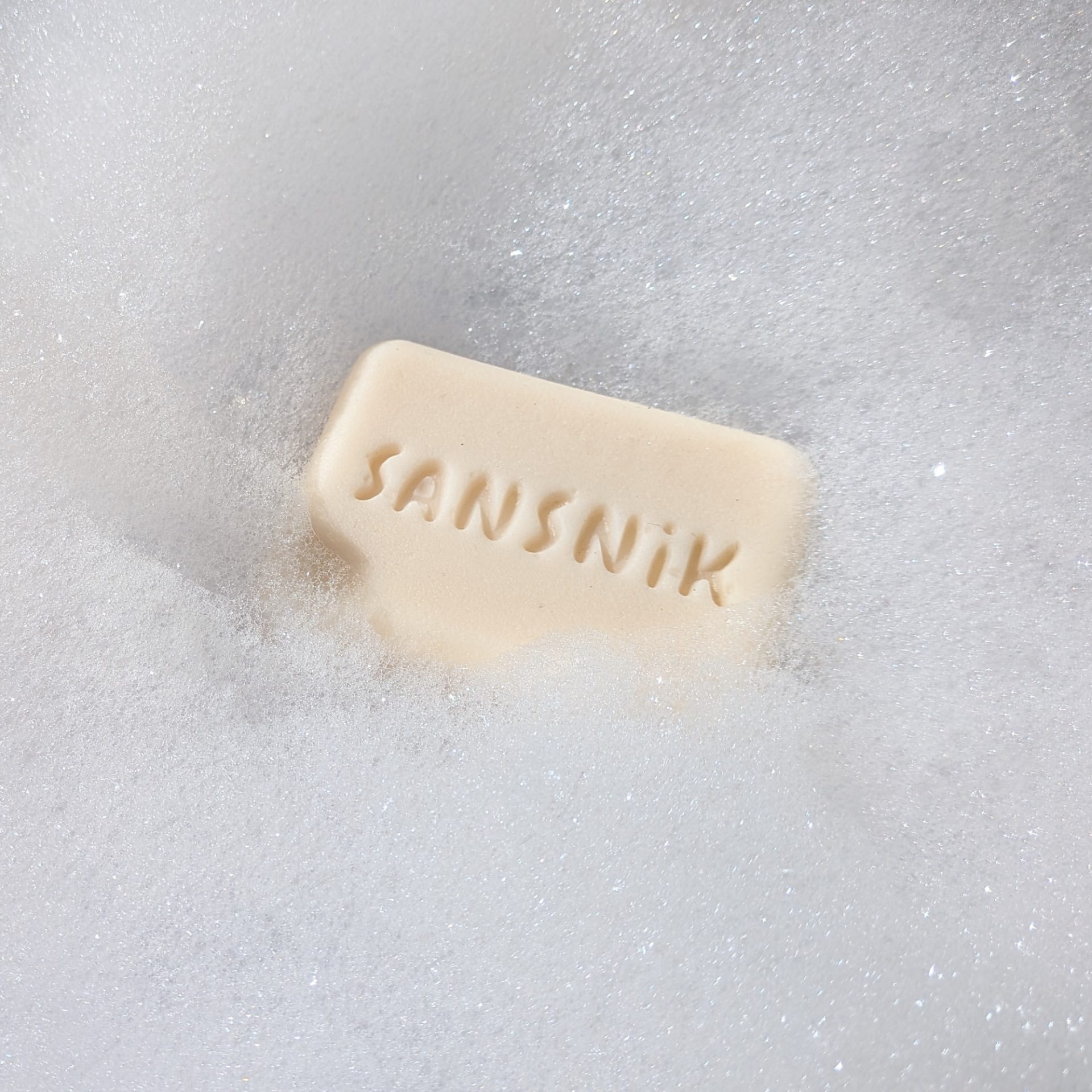
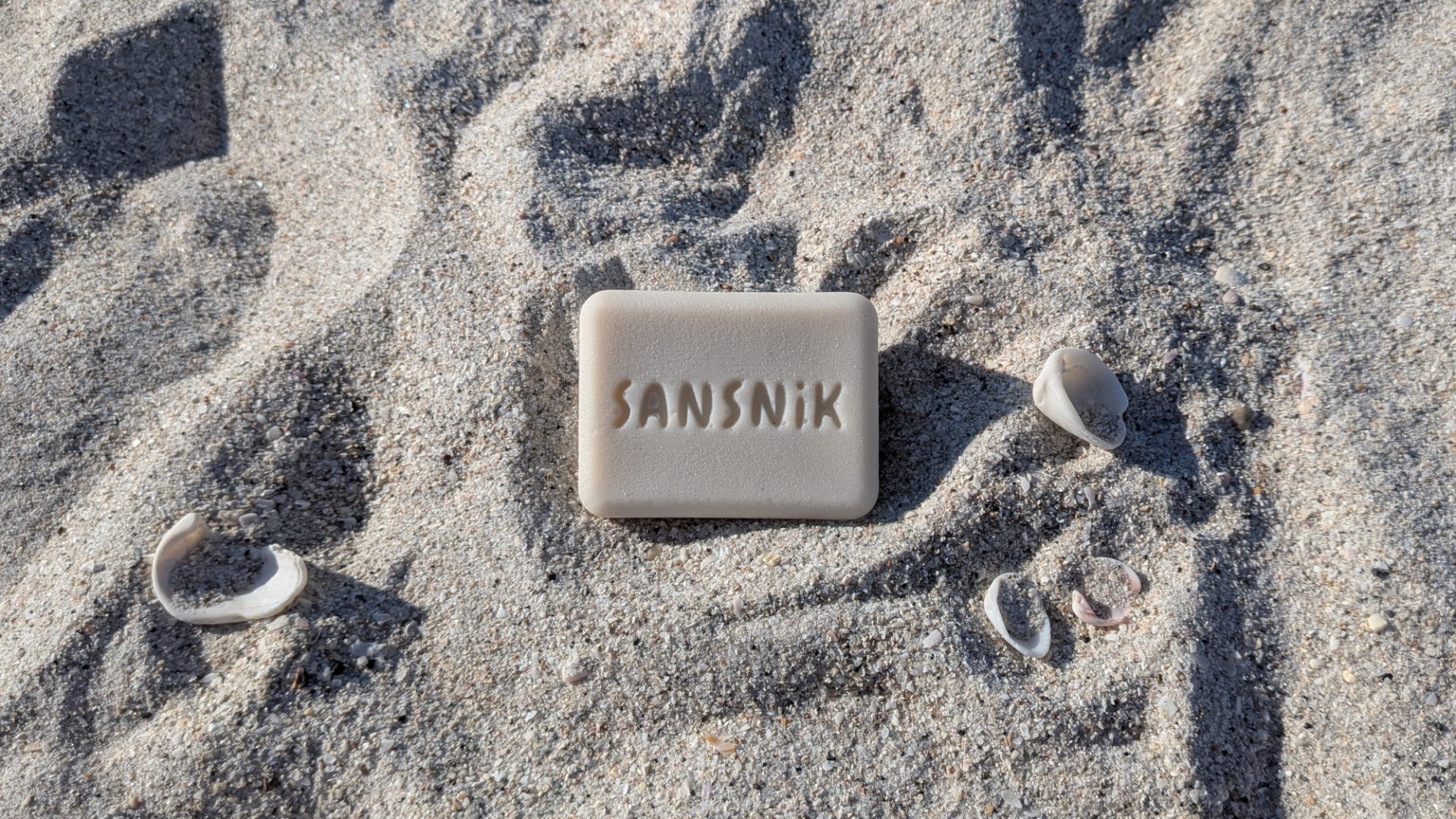
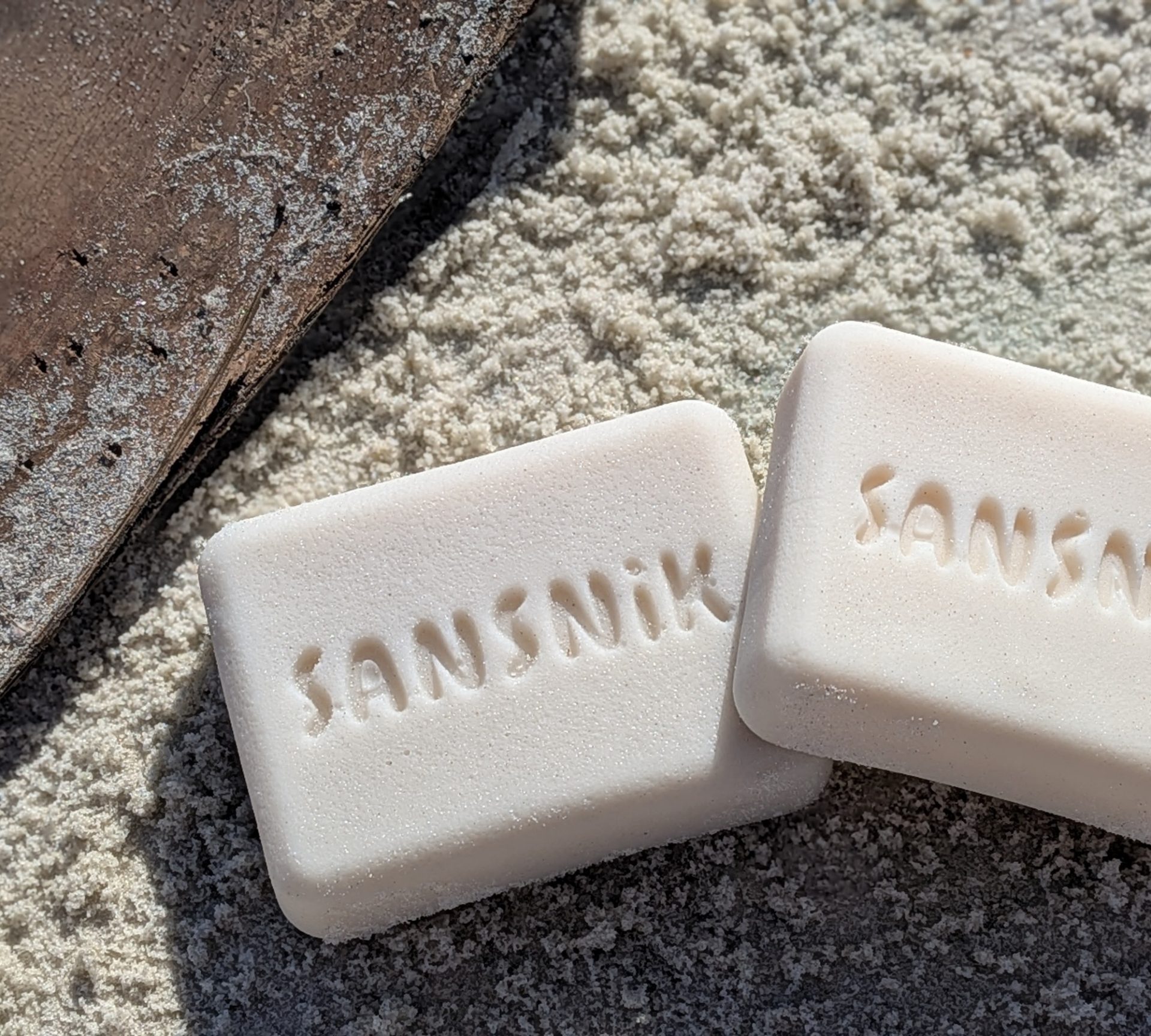
The Contour BarTM is a wash-off cleanser. Its customary disposal path is municipal wastewater, not a landfill. The F5 matrix is engineered with water-soluble components and food-grade starches (including corn and potato), plus surfactants that chemical-safety databases class as readily biodegradable.
Under the FTC Green Guides, an unqualified “biodegradable” claim needs competent evidence that the whole product breaks down and returns to nature within about a year after customary disposal. Contour’s substantiation today rests on that matrix chemistry and on peer-reviewed environmental-fate data for the core materials — not on a finished-bar OECD 301B lab report we do not yet have.
We are clear about the gap: as Contour scales, we will commission accredited OECD 301B testing on the F5 master base and append the result to our claims dossier. Until then, we do not pretend a laboratory certificate exists. We also note the honest exceptions: With Grit’s pumice is inert volcanic rock already “returned to nature,” and fragrance oils sit at a small fraction of the matrix.
People will scrutinize this page. That is the point. A biodegradable claim that cannot survive a careful reader is not a design win.
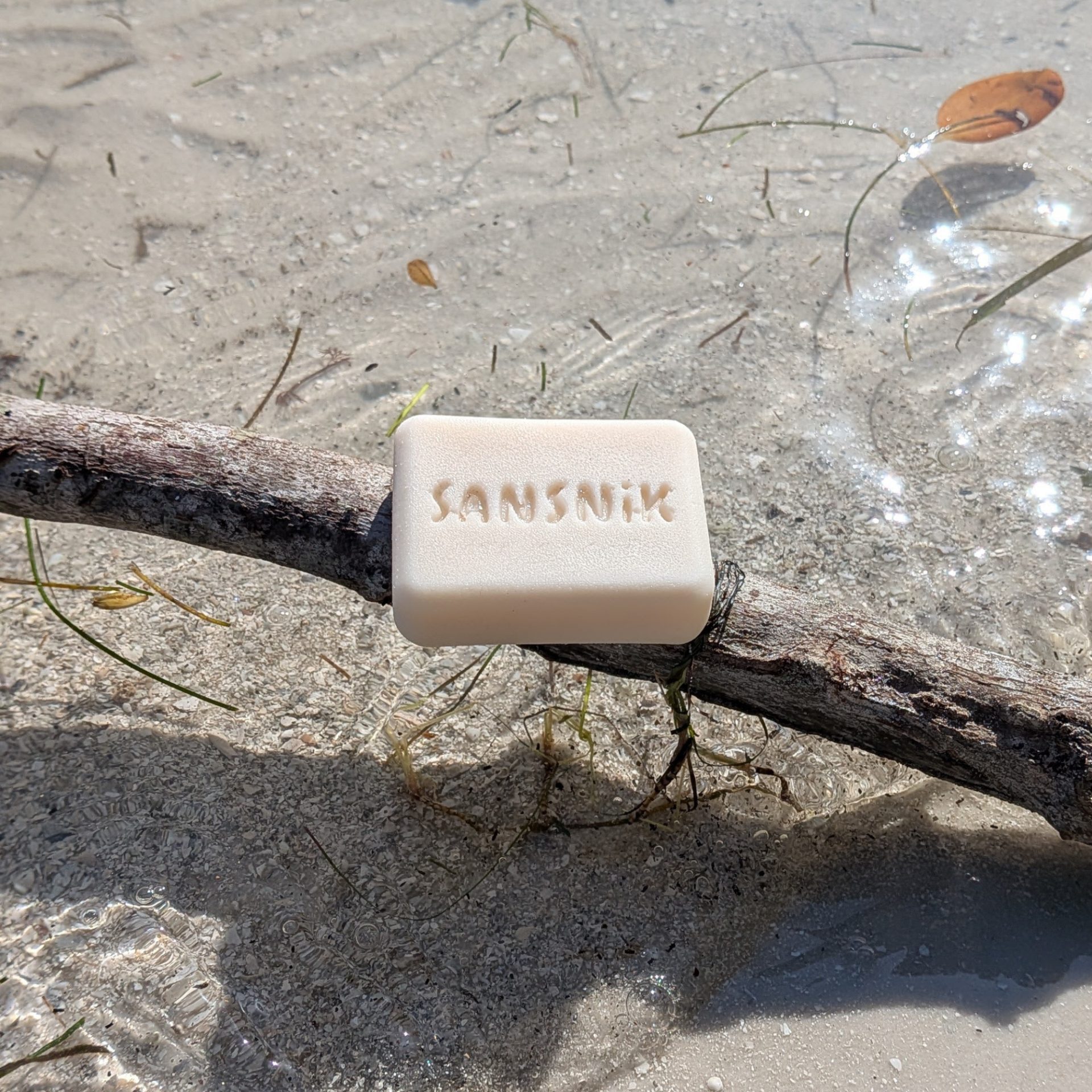
Vegan Contour
The Contour Bar lines are vegan. The brand-wide story is more careful than that.
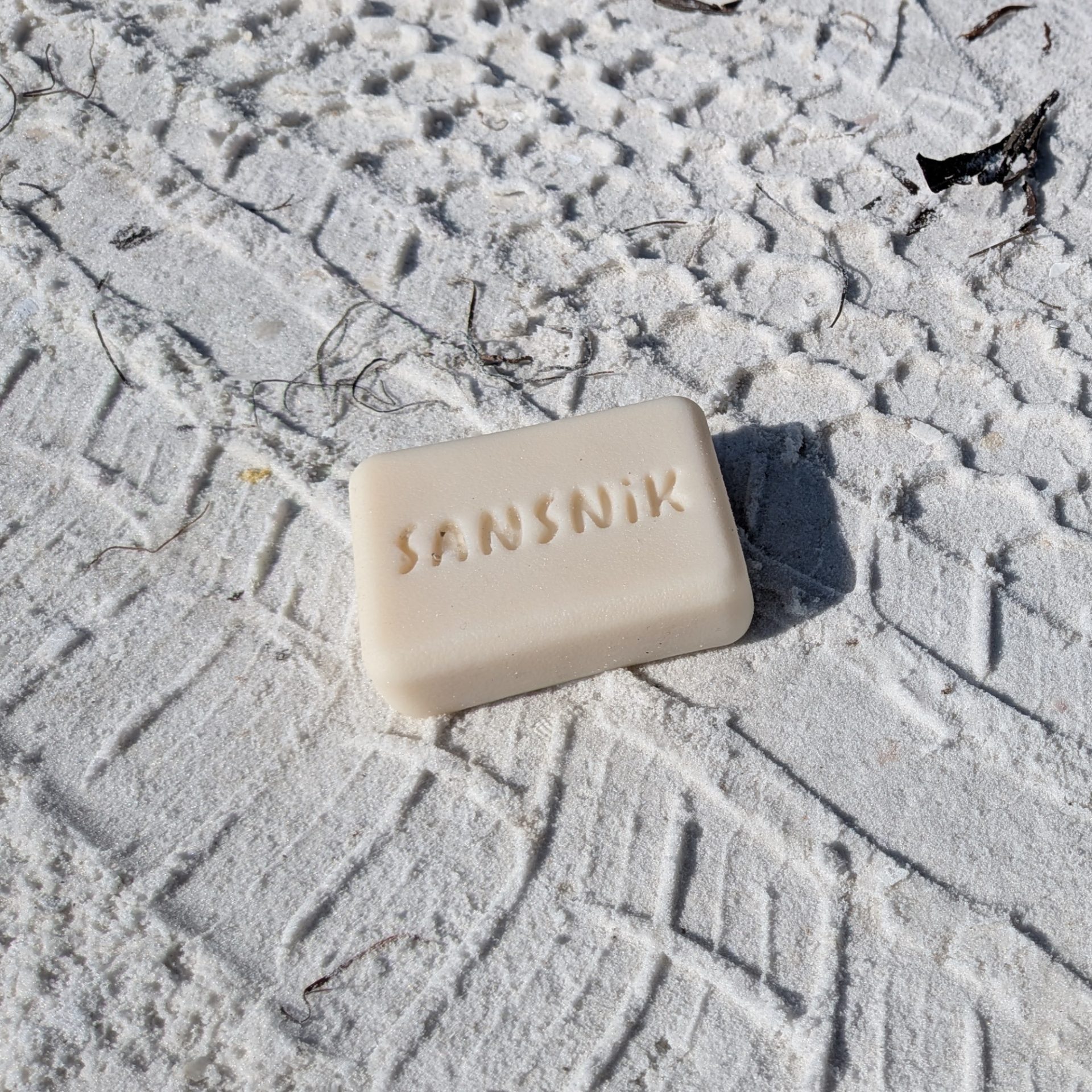
The Contour BarTM and The Contour BarTM With Grit are formulated without animal byproducts. That includes a hard rule on glycerin: commercial glycerin is often tallow-derived, so Contour uses vegetable glycerin — plant-derived, not animal-derived, and not a synthetic stand-in we market as “natural.”
We keep the vegan claim localized to those Contour cleansing lines. SANSNiK as a company is not promising that every future product will be vegan; later categories could use materials like beeswax or lanolin if the brief requires them. Saying Contour is vegan is true. Stretching that into a brand-wide badge would not be.
Internally we expect raw-material vendors not to conduct animal testing. We do not print “cruelty free” bunny icons on Contour packaging, because that language often implies third-party certifications we have not pursued. Honesty here means fewer logos, not louder ones.
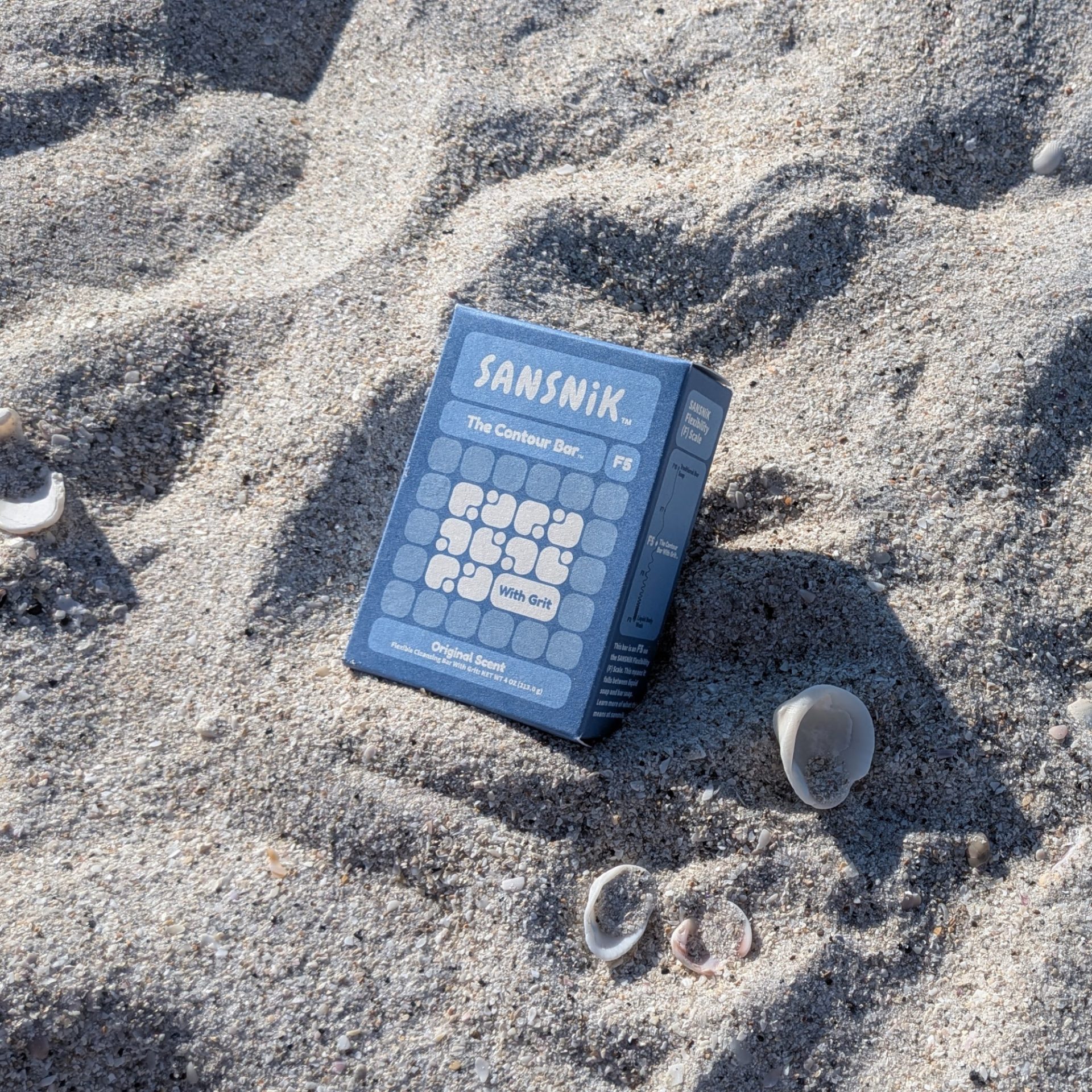
Plastic-free packaging
A paperboard carton that protects the bar — not a plastic jug that outlives it.
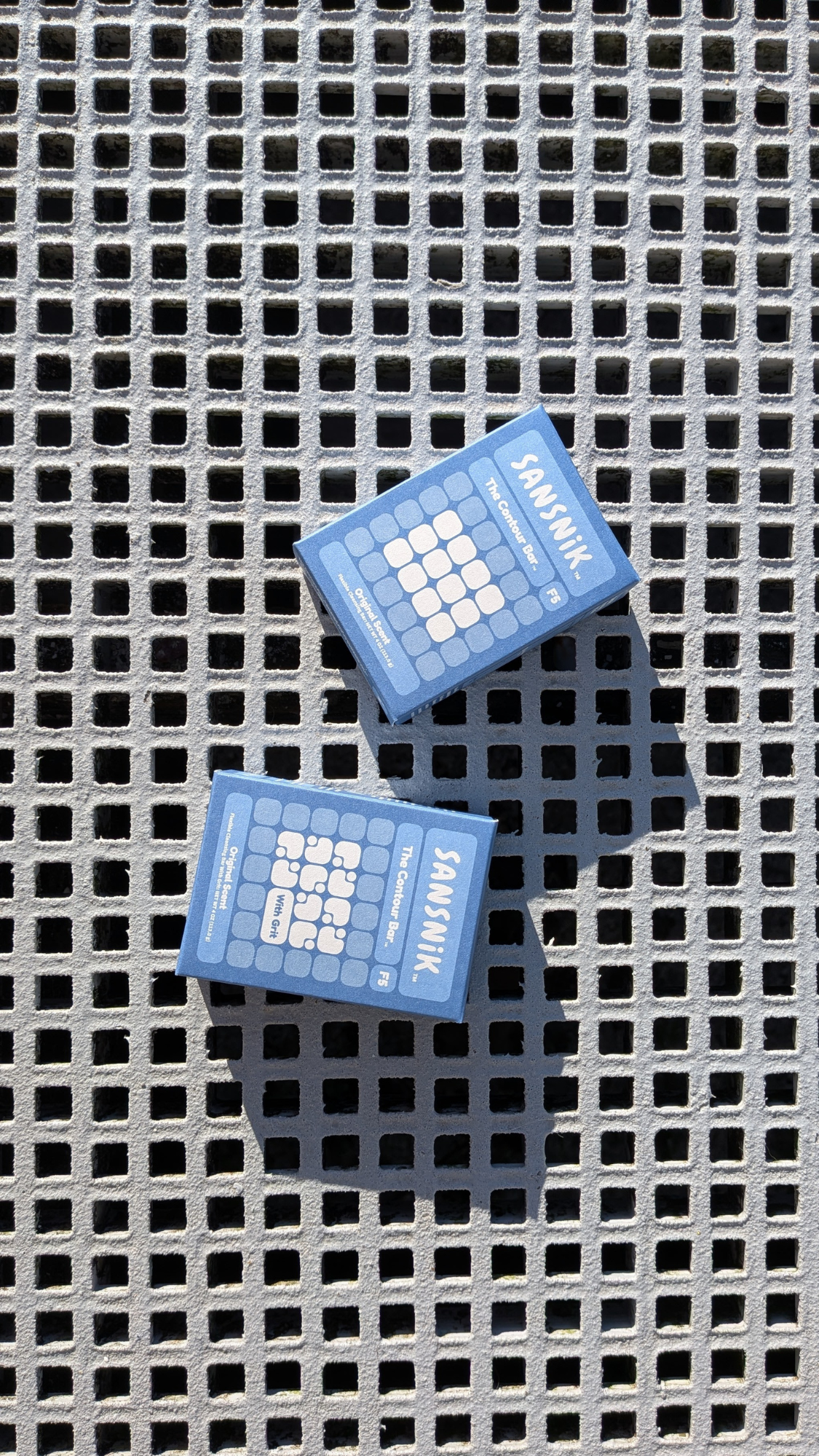
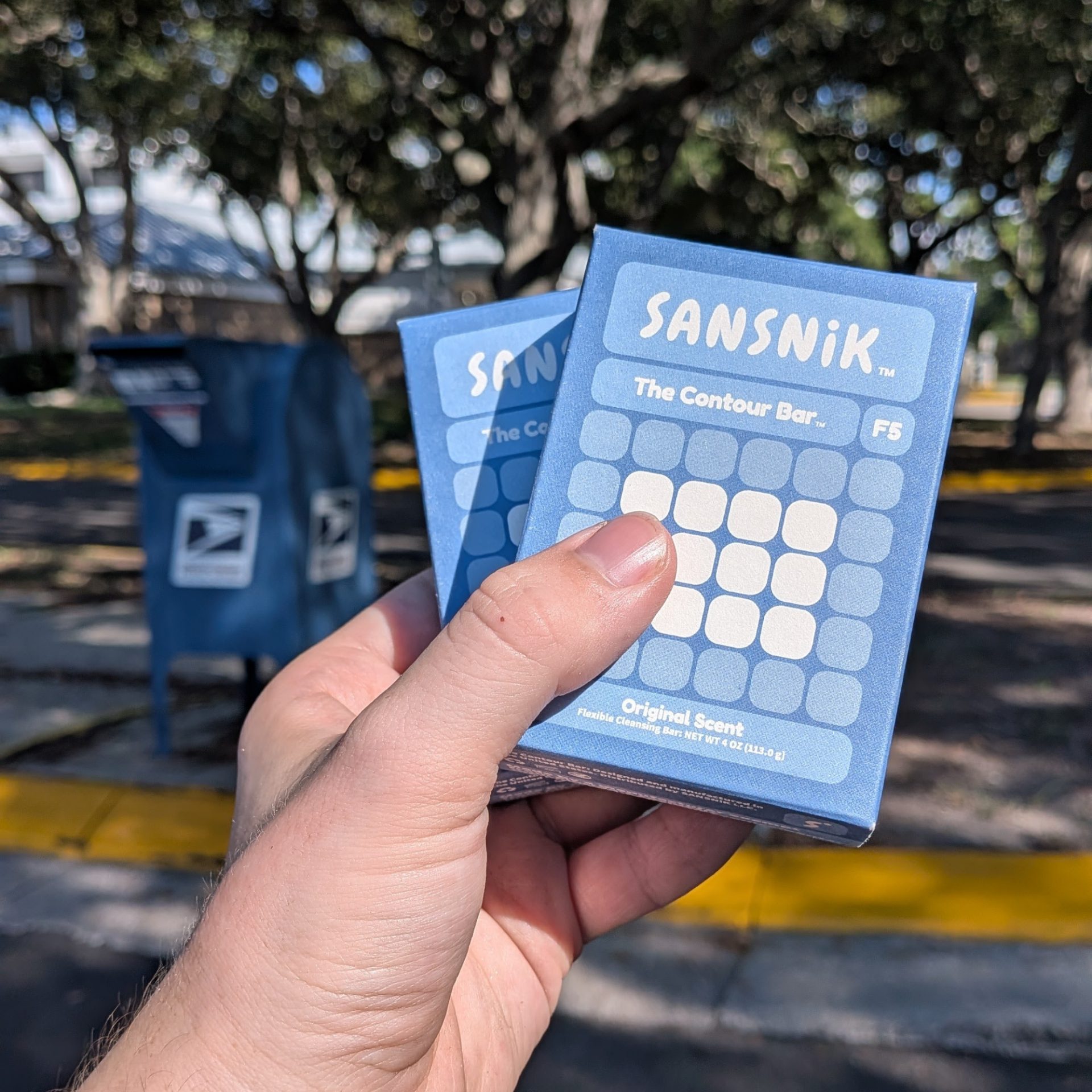
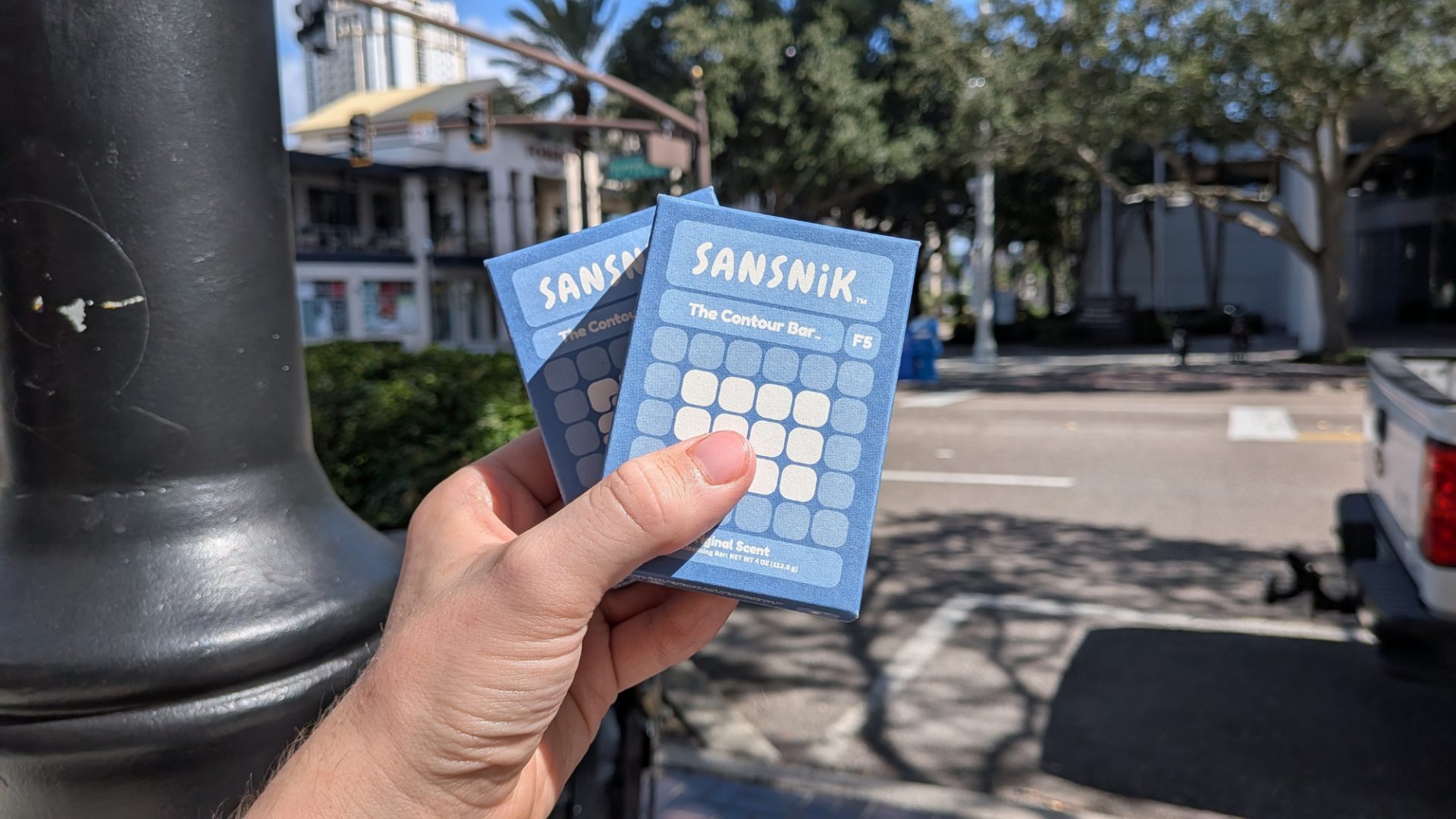
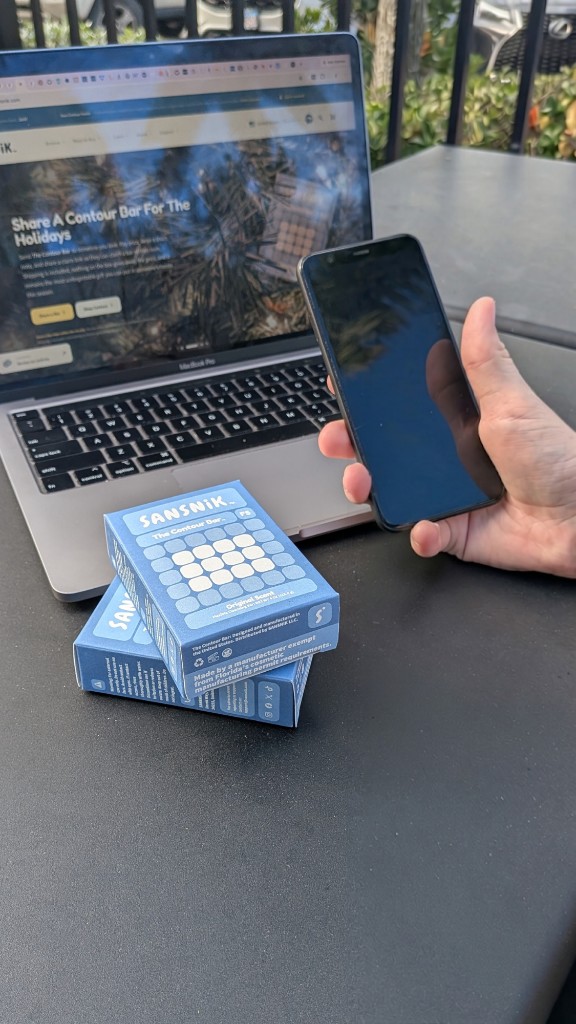
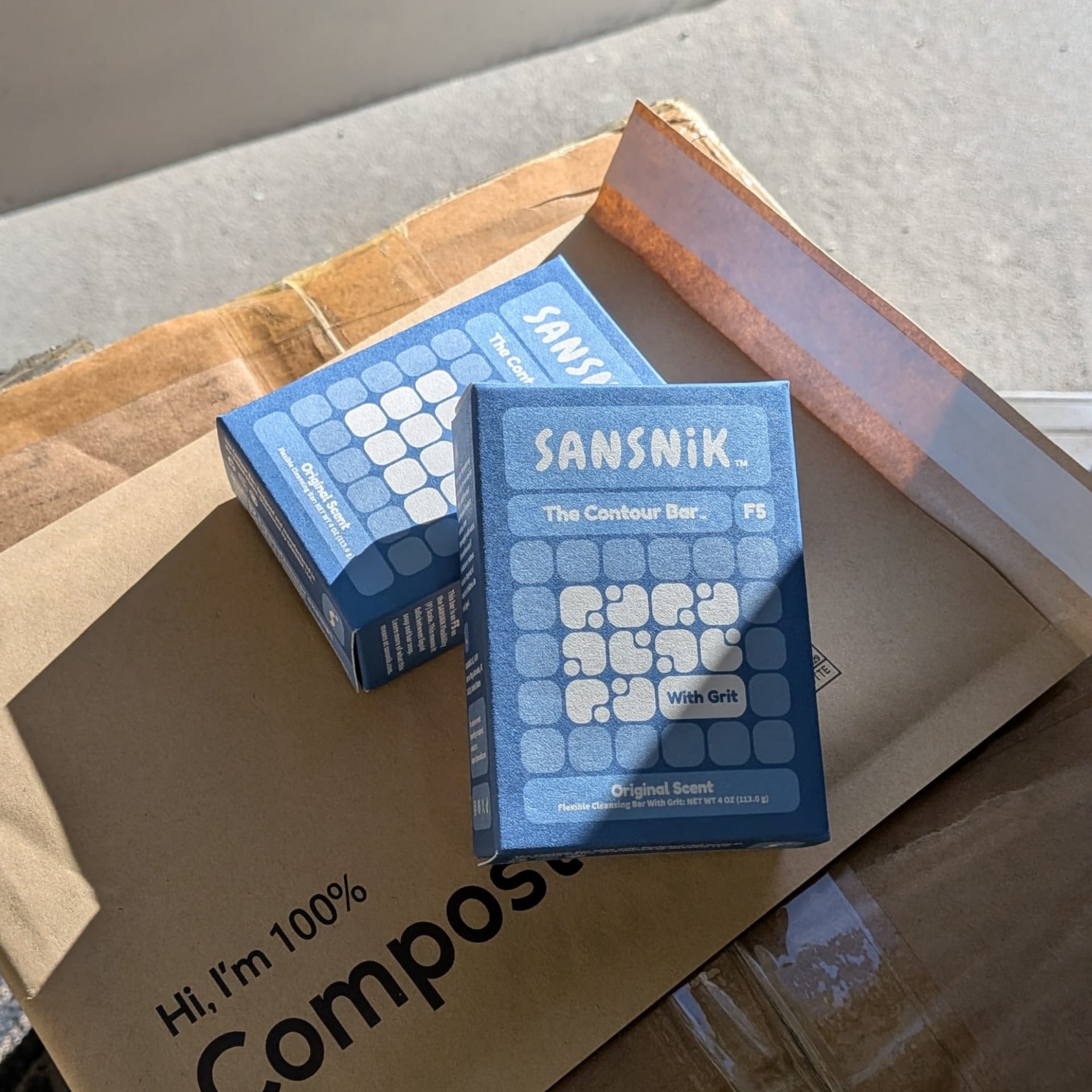
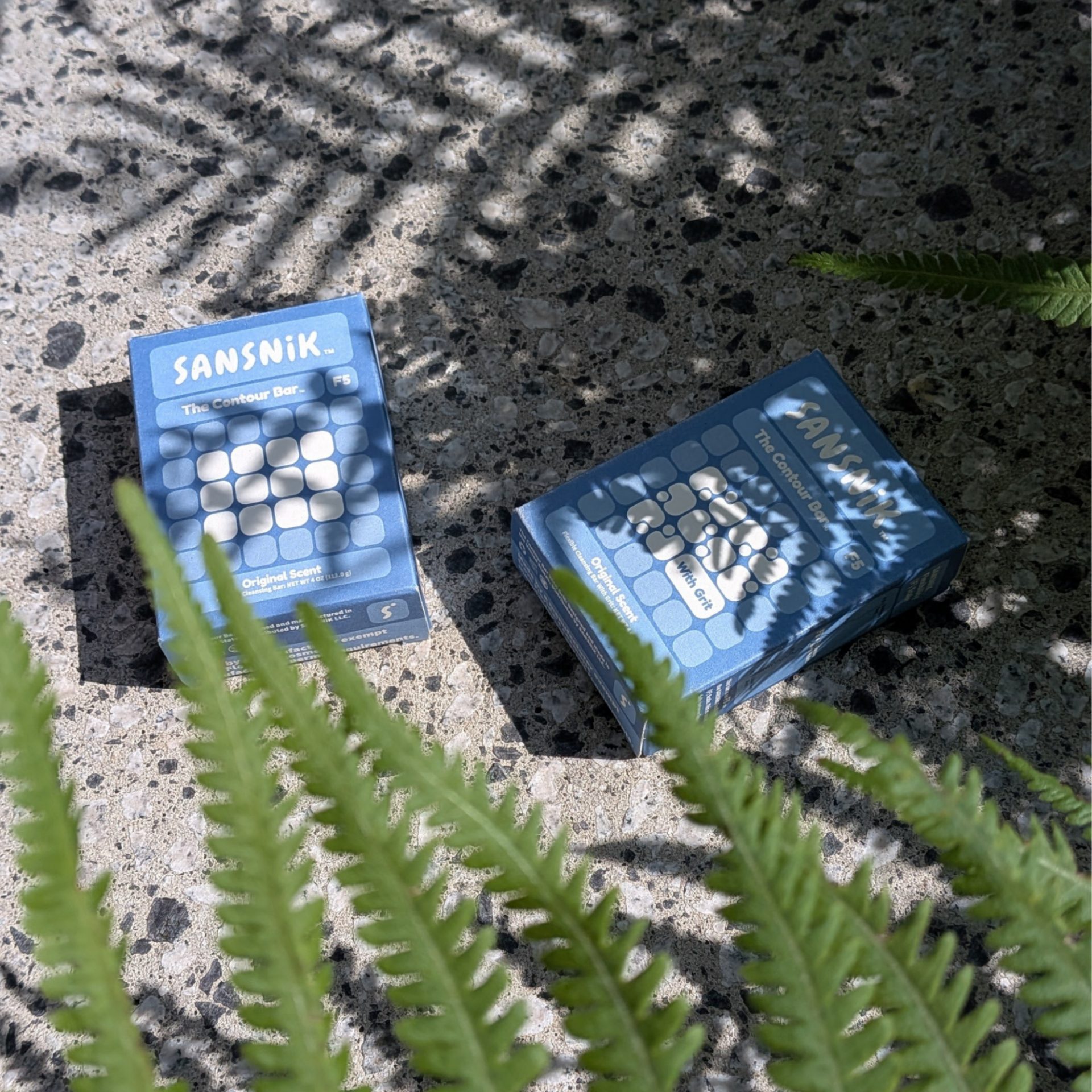
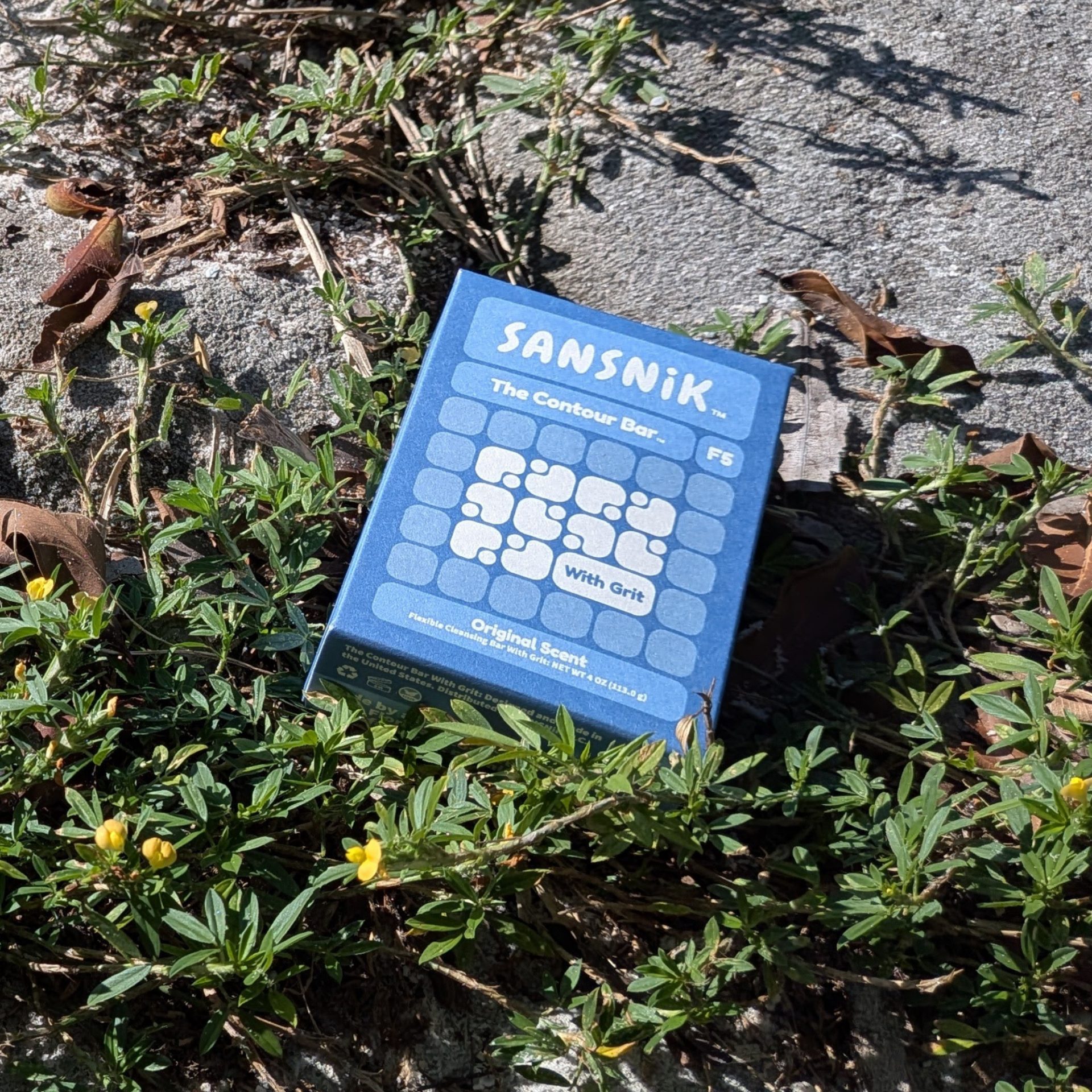
Contour ships in a structural carton built from kraft paperboard or SBS carton board — not a PET bottle, not a pump, not a mesh pouf. The job of the pack is to get a flexible bar to you intact. When that job can be done without plastic, it should be.
Packaging claims carry the highest regulatory risk, so we qualify them. Our dielines are designed around structurally compostable materials. Where compostability language appears, we follow the FTC’s need for clear consumer direction, including how2recycle.info guidance, because industrial composting access is not yet a “substantial majority” of U.S. households.
Optional cellulose film sleeves may appear on moisture-sensitive SKUs; they are wood-pulp derived when used, not a default plastic wrap. Printing inks are a small fraction of pack weight. If materials change outside the approved board scope, the claims dossier has to change before that inventory ships.
Made here, claimed here
Manufacturing care and environmental care are the same discipline.
Contour is made under SANSNiKTM’s own roof and sold direct. That is not an environmental marketing flourish; it is how we keep the formula, the flex, the carton, and the copy in one conversation. No wholesale guesswork padding inventory that never reaches a shower.
The same “zero downsides” standard that kept Contour off the shelf for a second year of work also governs what we are willing to print. A flexible bar that melts in a truck fails. An environmental claim that melts under the Green Guides fails the same way.
Leaving nothing behind means the rinse, the pack, and the promise should all be designed — not bolted on after the product photo is done.
In one view
What Contour is willing to say today
- Biodegradable Contour matrix. Engineered for aqueous wastewater breakdown via water-soluble, organic materials and readily biodegradable surfactants; formal finished-bar OECD 301B testing is planned as we scale.
- Vegan Contour bars. No animal byproducts in The Contour Bar or With Grit; vegetable glycerin only (never animal-derived). Not a brand-wide vegan promise for every future SANSNiK product.
- Plastic-free primary packaging. Paperboard cartons designed for compostable architecture, with qualified language where compostability is claimed.
- Direct manufacture. Bars made and sold without wholesale padding, so environmental and product decisions stay with the people building Contour.
Read the evidence
Every public environmental claim Contour makes is indexed in our substantiation dossier.
That file is the FTC-framed reference for vegan Contour bars, biodegradable matrix engineering, and packaging architecture — including what is already documented and what laboratory work is still ahead.